
Talk with our local travel specialist who can help organize your trip.
News
Nepal has become the first in the world in its closeness to nature!
- By: Naba Raj Amgai
- Posted on: Mon Nov 10, 2025

This must be the most heartwarming news about Nepal that has been spreading around the world recently - Nepal is now ranked first in the world when it comes to closeness to nature.
A recent global study on how people in different countries connect with the natural world has shown that Nepal tops the list of countries most connected to nature.
Nepal is followed by Iran, South Africa, Bangladesh, and Nigeria.
I interacted via email with Miles Richardson, a professor at the University of Dubai who led that global search.
In his opinion, how can Nepal benefit immensely from such a high rating?
The study, in which Nepal scored the highest, surveyed 57,000 people from 61 countries. According to its findings, countries like Britain, the Netherlands, Canada, Germany, Israel, Japan, and Spain were found to be the least connected to nature. However, it was shown that those countries considered to be highly developed were at the bottom of the list of countries most connected to nature.
A new study involving researchers from Britain and Austria was published this week in the UK's Guardian newspaper, the journal AmBio and Finding Nature.
According to the researchers, how much or little a country is connected to nature is an emotional and psychological issue that measures the relationship between humans and other species.
Researchers have concluded that people in countries with a high connection to nature tend to be more environmentally friendly and have better overall health. In contrast, countries with a low connection to nature tend to have lower biodiversity. In addition, inequality in society leads to an individualistic and materialistic character.
However, countries with less connection to nature are more likely to do business. Despite falling low on the list of countries with closeness to nature, these countries have been found to rank highly in the World Bank's 'Doing Business Report'.
Suggestions given to Nepal by the chief researcher
Professor Miles Richardson, from the University of Derby in the UK, is the lead researcher on the latest study. He is a professor of Human Factors and Nature Connectedness at the University of Derby in central England.
Nepal is often in the world news for its natural and man-made disasters. It ranks near the bottom or bottom in indicators of pollution, transparency, negative impacts of climate change, and underdevelopment. Nepal is only seen as a must-visit mountain tourist destination and adventure activity destination.
What benefits can Nepal reap now that Nepal has proven to be the best in the latest global study on which country is most connected to nature?
I posed this question to Professor Miles, the lead researcher on this new study, via email.
At first, he said he was not in a position to answer.
However, he said, 'As the country most connected to nature in the world, Nepal can position itself as a world leader in terms of human-nature harmony.'
By doing so, 'Nepal can present a different narrative by standing against models of hyper-industrial development that have reaped economic benefits, even at the cost of some natural resources.'
Professor Miles believes that Nepal has ample room to benefit greatly from recent achievements.
For example, Nepal can present its achievements most closely linked to nature in diplomatic, environmental, and cultural forums. In doing so, Nepal can also present this achievement in discussions on environmental diplomacy as well as the Sustainable Development Goals (SDGs).
According to him, Nepal has a high potential to use the evidence that it is the closest to nature in the world in its cultural diplomacy.
Professor Miles continued, "Nepal can share its nature-loving practices through its cultural exchange programs. Perhaps, realizing this, international donors and conservation organizations may be more willing to support Nepal's nature-related initiatives. They may consider this characteristic of Nepal as fertile ground for fruitful investment."
According to him, the fact that the world's most developed countries are less connected to nature can be a great lesson for everyone.
Professor Miles said, "What is not to forget is that the countries that industrialized the fastest on Earth are at the bottom of the list created by this study. What this suggests is that countries like Nepal should not lose what they have. They should be proud of their local knowledge. They should share with the world community not only the natural beauty of their country, but also the emotional and spiritual significance of Nepal."
Another important suggestion he made is this - we should move forward by considering what Nepal can teach countries that have lost touch with nature in the coming days.
In an article published this week on the Finding Nature blog, he emphasized the need for the entire global community to bring about a sweeping change in the way we interact with nature to slow the increasing loss of biodiversity on Earth.
He writes — the most powerful tool for that is for everyone to connect emotionally with nature.
Featured Trips
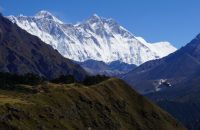
Everest Base Camp Trek - 14 days
Looking for an exciting Himalayan experience? Join us on our 14 day Everest Base Camp Trek - get ready to be stunned by breathtaking views and discover magical Nepalese cultures!
Inquire Now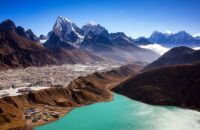
Gokyo Lakes Trek with Renjo La Pass - 14 days
Gokyo Lakes Trek 14 days take you across Renjo La Pass, the easiest pass of the Everest region. Spectacular Gokyo lakes and Everest mountain scenery.
Inquire NowWhat do Nepali experts say?
Nepali nature lovers and experts are very excited to hear the latest news. One expert said he was not surprised by the news that Nepal, known as a 'natural paradise', is now the best in terms of proximity to nature.
Professor Sangeeta Rajbhandari, head of the Central Department of Botany at Tribhuvan University, said, "Everyone knows that Nepal is very rich in natural resources. I am very excited to hear this news."
In his opinion, if we work selflessly in Nepal, we can benefit greatly from nature.
She said, "Different plants are required for our different worships. Our plants have so many medicinal properties that we haven't even had time to study them. Our city dwellers suffer from many diseases. Why do people in the villages eat less green vegetables and fruits?"
Tourism expert and conservationist Karna Shakya also said that he was not too surprised to hear the latest news.
"Every community and culture in Nepal is connected to nature. There is no other place in Nepal with such natural and cultural diversity. The community and the government should further protect and promote such things," he said.
Wide Nepali diversity
Let us consider these facts about Nepali nature and culture for a moment — There are more than one hundred ethnic groups, tribes, and ethnic groups listed in Nepal. They speak almost as many languages. They practice different religions and cultures. Scattered across the Himalayas, hills, and plains, they have lived in harmony with human communities and nature for centuries.
Although smaller than India and China, 46 percent of Nepal's land area is covered by forests and shrubs. 24 percent of the country's land area is included in protected areas. Nepal is so rich in biodiversity that about 17,000 species of animals have been found within this area. And about 7,000 species of plants have been found.
Ghanshyam Gurung, a representative of the World Wildlife Fund Nepal who has conducted extensive studies and research on the biodiversity of the Himalayan region, agrees with Sangita Rajbhandari, head of the Central Department of Botany, Tribhuvan University, on one thing - many doors of possibility will open once Nepal proves to be excellent in its proximity to nature.
Gurung said, "With this status, Nepal can become a center for the world to study the harmonious relationship between humans and the natural world. It puts Nepal more prominently on the world's natural, spiritual and cultural tourism map. It provides an opportunity to promote Nepal's unique experiences and benefit from being environmentally and culturally responsible."
- By: Naba Raj Amgai
- Posted on: Monday Nov 10, 2025

About Author -Naba Raj Amgai
Naba Raj Amgai, stepped into the world of travel and tourism in 1996. He is Founder and Managing Director of Third Rock Adventures.
Beginning his journey in the tourism industry as a humble Porter Guide to founding hospitality establishments and an adventure travel company, he has come a long way.
In a career spanning more than two decades, he has achieved more than anybody dreams of achieving. Along with his professional achievements, his selfless contribution towards his community and society has won him a lot of accolades and praises.
Having dedicated more than two decades in the tourism and hospitality sector, he has amassed a wealth of experience.
After passing high school, he began helping out some trekking guides and was soon recruited as a porter guide at a reputed trekking agency. Within a short time, he was individually guiding clients across the well-known trails of the Himalayas.
He went on to lead tour groups on multi-country tours to Nepal, Tibet, Bhutan and India. Being a part of mountain climbing expeditions familiarised him with expedition logistics and operations. Later on, he went to become the Executive Director and took over the reins of Operations, Sales and Marketing departments. Spending several years in the tourism field has made Naba Raj Amgai a destination expert.
Travelling is his passion and he has been to many countries across the world – USA, Canada, Australia, Japan, Holland, Germany, Austria and many parts of Asia.
His journeys to different parts of the world have enriched his travel experience and knowledge. This experience has been instrumental in planning and organizing successful trips for several clients.
As of today many reputed travel companies, hotels and restaurants are under his leadership. A dynamic and proactive leader, he continues to inspire and motivate people from all walks of life.
Email me if you have any question.











Leave a comment / Call Us at +977 9851055684
Your email address will not be published. Required fields are marked *